Photoselective Filters in Low Vision Care
Clinical Benefits and Rationale
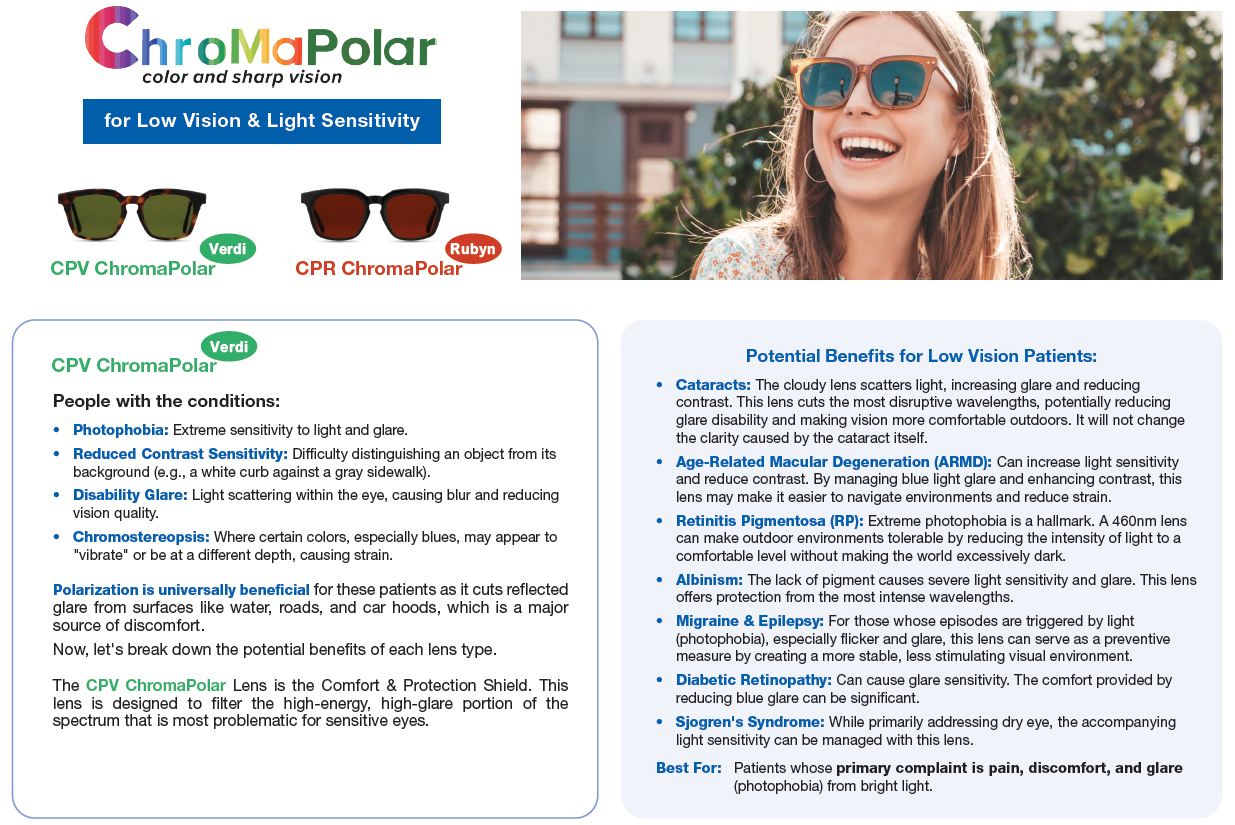
Photoselective lters are a clinically proven aid in the rehabilitation of individuals with low vision due to retinal, neurological, or ocular media disorders. By selectively ltering short-wavelength (blue-violet) light, these lters enhance the quality of vision, reduce discomfort, and improve functional performance in daily life.
Why They Work
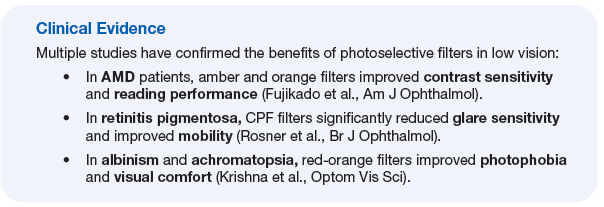
- Blue light reduction: Short-wavelength light scatters more inside the eye and contributes to glare, low contrast, and visual noise. Filtering this portion of the spectrum improves image clarity and contrast sensitivity.
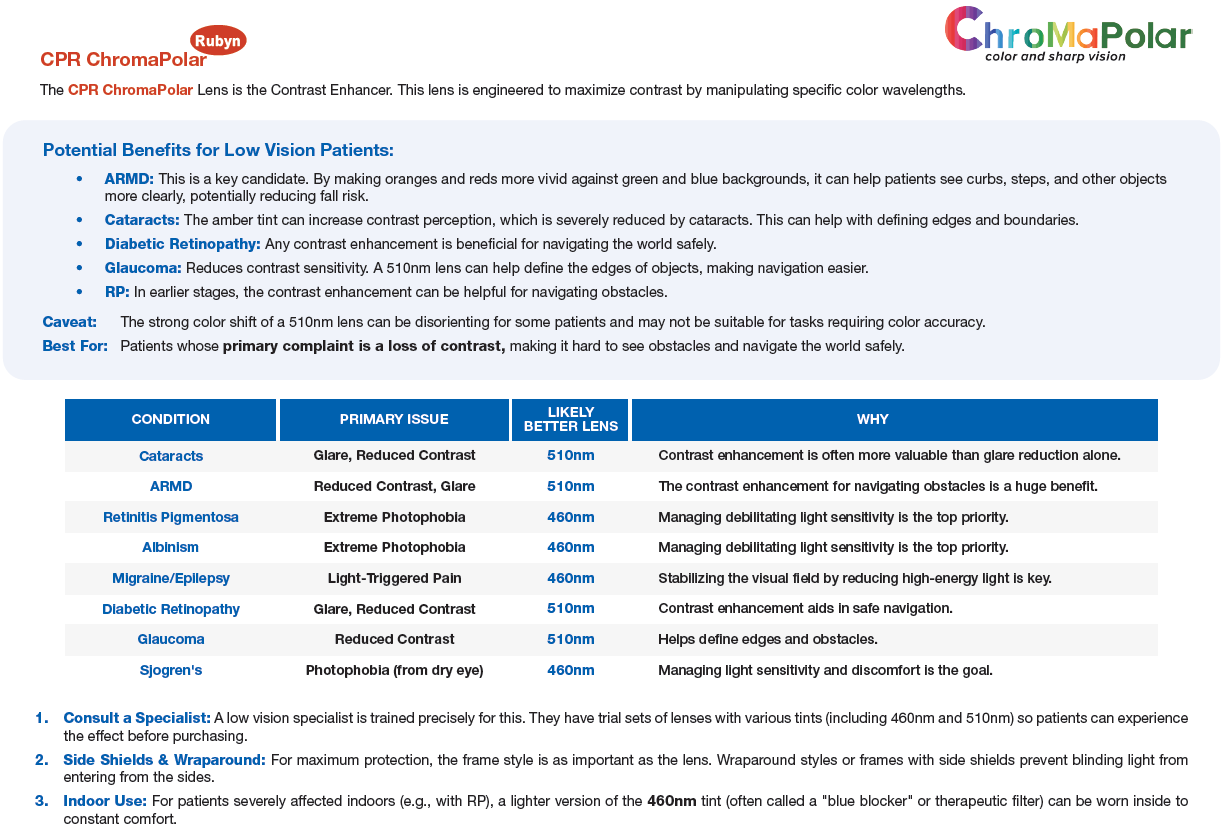
- Glare control: Patients with conditions such as age-related macular degeneration, retinitis pigmentosa, albinism, or optic nerve disorders often experience disabling glare. Photoselective filters reduce both disability and discomfort glare, resulting in greater comfort and con fidence.
- Visual function stabilization: By reducing excessive light input and cortical overstimulation, filters support a more stable and efficient visual system, particularly in bright or changing light conditions.
A Personalized Solution
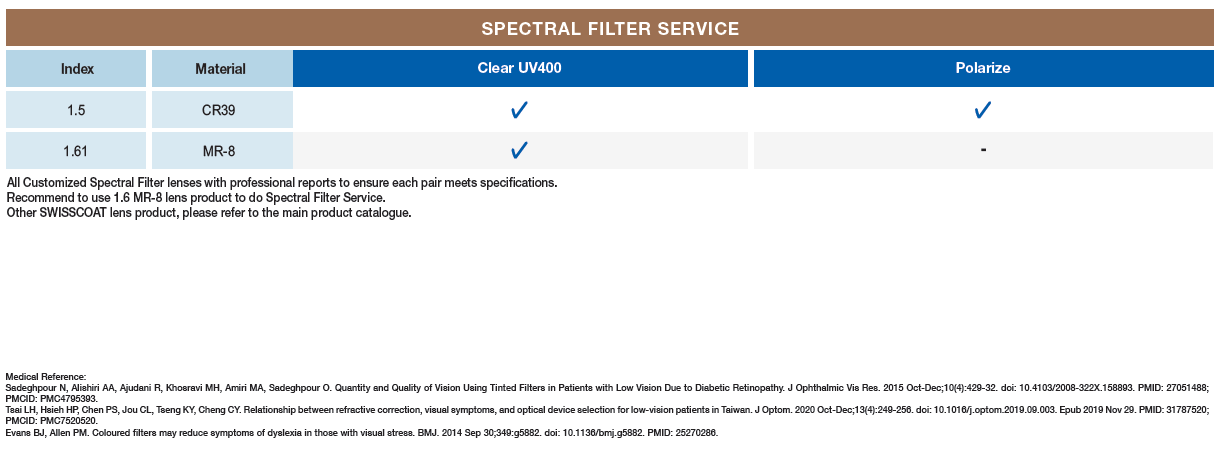
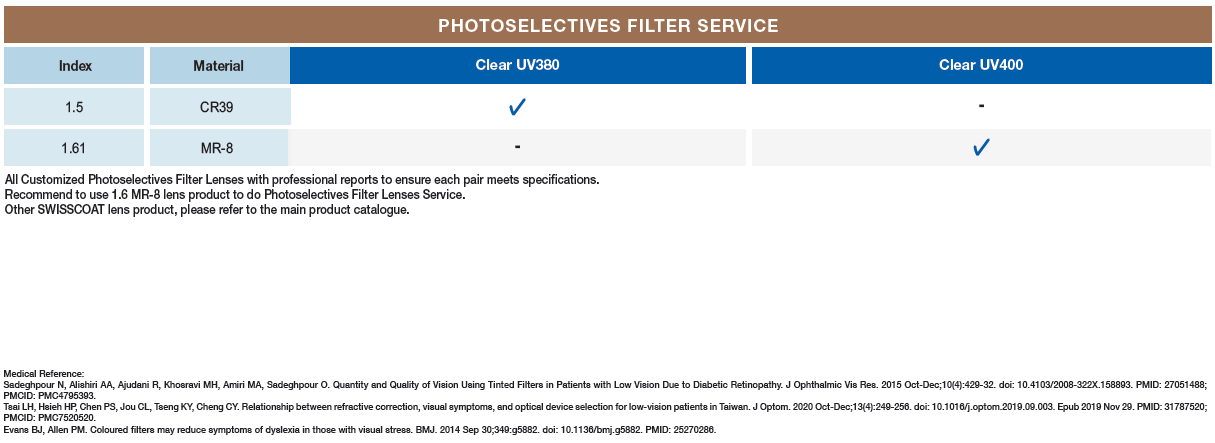
Optimal results depend on selecting the right filter based on the patient’s condition, lifestyle, and light sensitivity. SWISSCOAT offers a wide range of clinically validated filters in various transmission levels and spectral pro files to support custom fitting. Trial kits and guided selection tools are available to help practitioners match the right filter to the right patient.
Spectral Color Filter Lenses
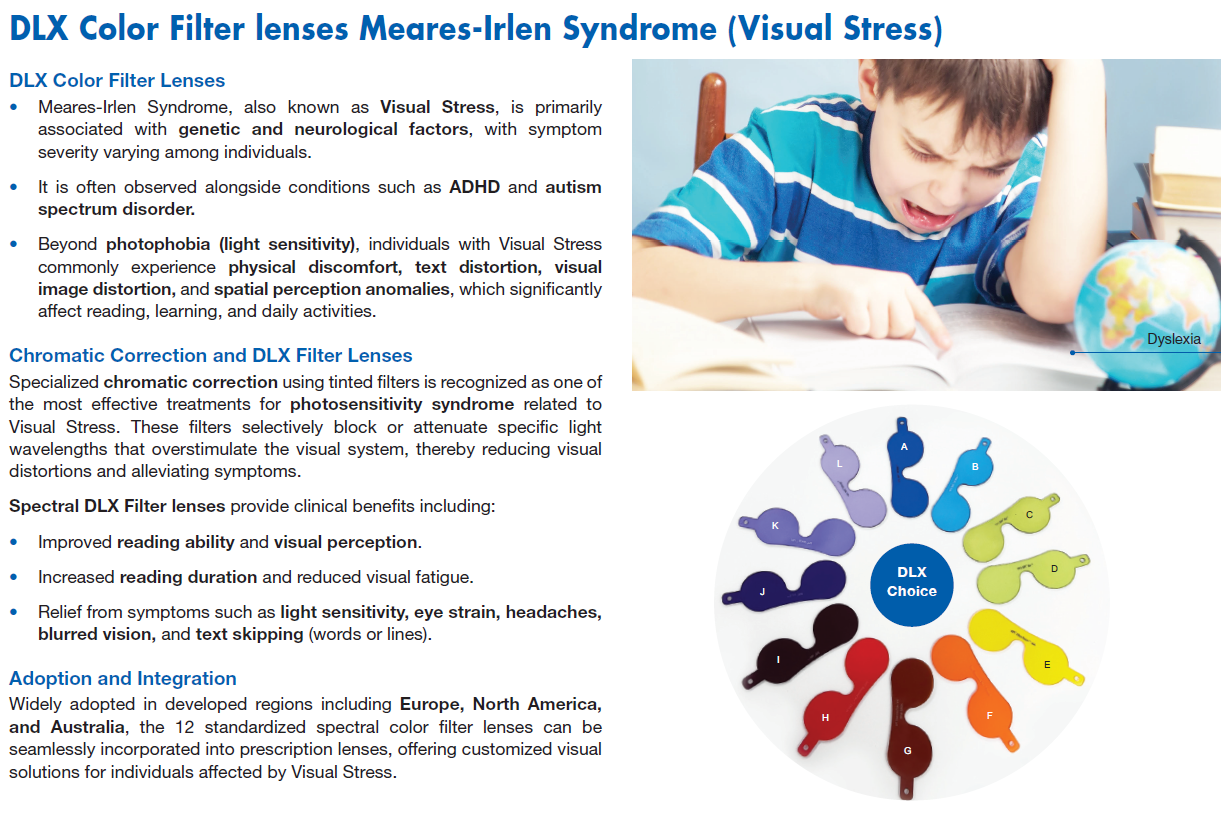
The selection of optimal spectral color lter lenses is inherently subjective, as it must be tailored to the individual’s unique visual needs, preferences, and speci c ocular conditions. Contrary to common misconception, darker lenses do not necessarily provide superior glare reduction; while they may diminish glare, excessive tinting can also compromise overall visibility. Therefore, it is advisable to employ the lightest tint that effectively meets the patient’s visual requirements rather than defaulting to darker shades.
Applications for Degenerative Eye Conditions
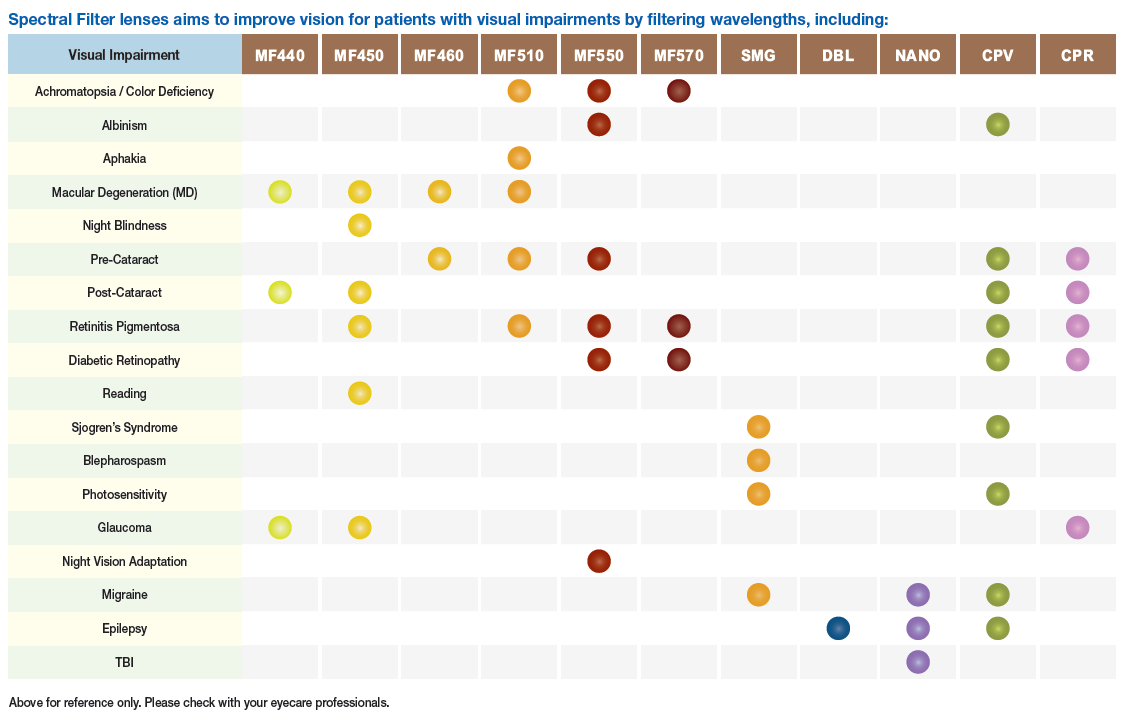
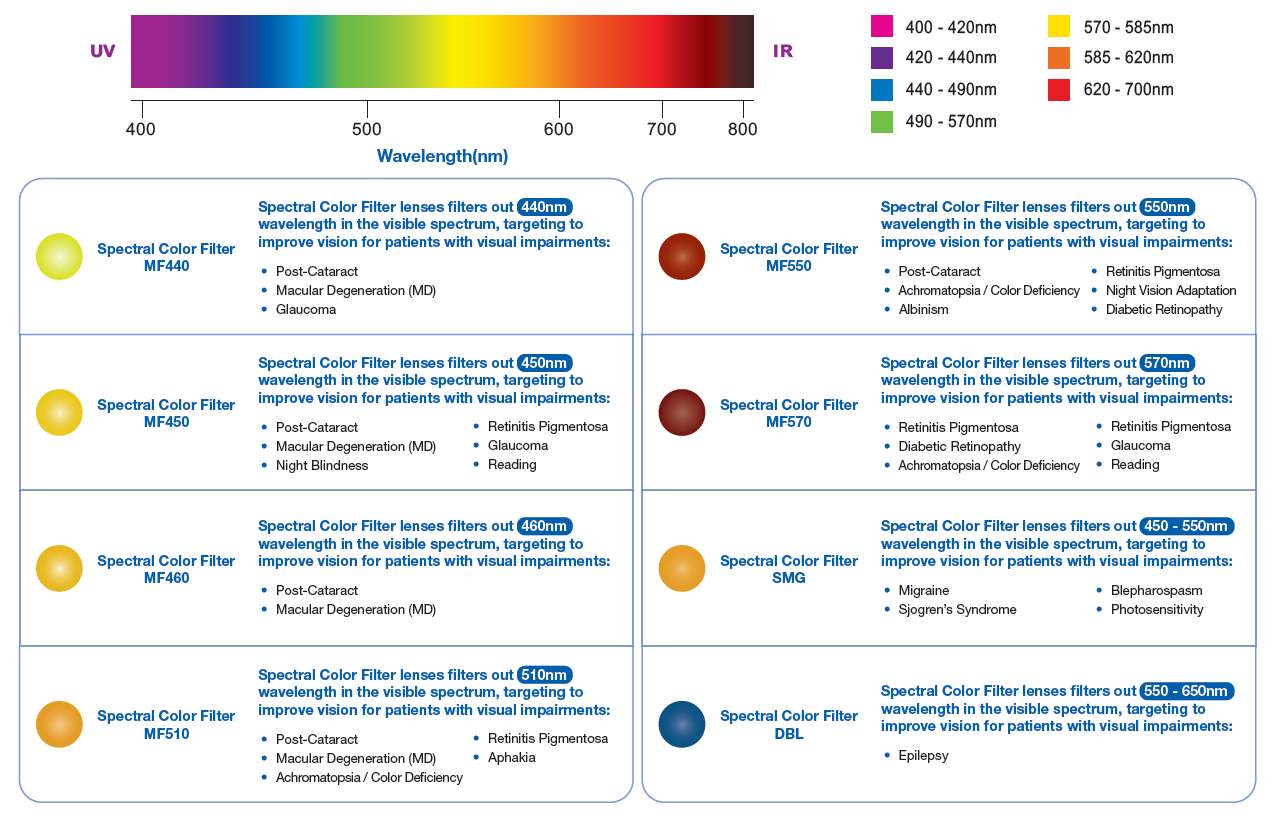
Scientific c evidence supports the use of specialized spectral filter lenses that selectively attenuate speci fic wavelengths within the visible spectrum. These filters provide multiple therapeutic benefits for patients with degenerative retinal diseases, including:
- Blocking ultraviolet (UV) radiation and filtering high-energy short-wavelength visible light (violet to blue spectrum), thereby protecting retinal tissue from phototoxic damage.
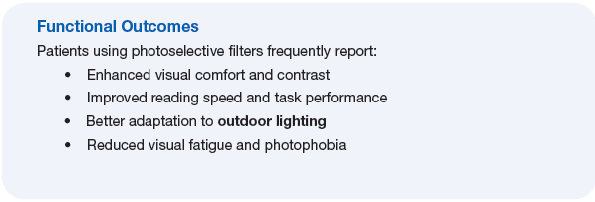
- Enhancing image contrast, which facilitates improved visual discrimination in challenging lighting environments.
- Supporting more efficient ocular adaptation to varying light conditions, reducing visual discomfort.
- Improving overall visual quality, contributing to better functional vision and patient comfort.